
If you’re new to makeup, you’ve probably wondered, foundation or concealer first?
It’s one of the most common beauty questions people search online before getting
ready for school, work, parties, or special events. Many beginners feel confused
because different makeup tutorials seem to give different advice. The good news is that there is a simple answer.
In this guide, you’ll learn the correct makeup order, when to use each product, common mistakes, expert tips, and beginner-friendly explanations in easy English.
Foundation or Concealer First? – Quick Answer
The short answer is foundation first, then concealer.
Applying foundation first creates an even skin tone. After that, you can use concealer only where you need extra coverage, such as under your eyes, around your nose, or on blemishes. This method usually looks more natural and uses less product.
Quick Makeup Order
- Cleanser
- Moisturizer
- Sunscreen (daytime)
- Primer (optional)
- Foundation
- Concealer
- Setting Powder
- Bronzer or Contour
- Blush
- Highlighter
- Setting Spray
Simple Examples
Example 1
You apply foundation to your whole face first. Then you use concealer under your eyes to brighten dark circles.
Example 2
A small pimple is still visible after foundation. You dab concealer only on the spot for extra coverage.
Easy Memory Trick
Think of foundation as painting the wall first. Concealer is like fixing the tiny spots afterward.
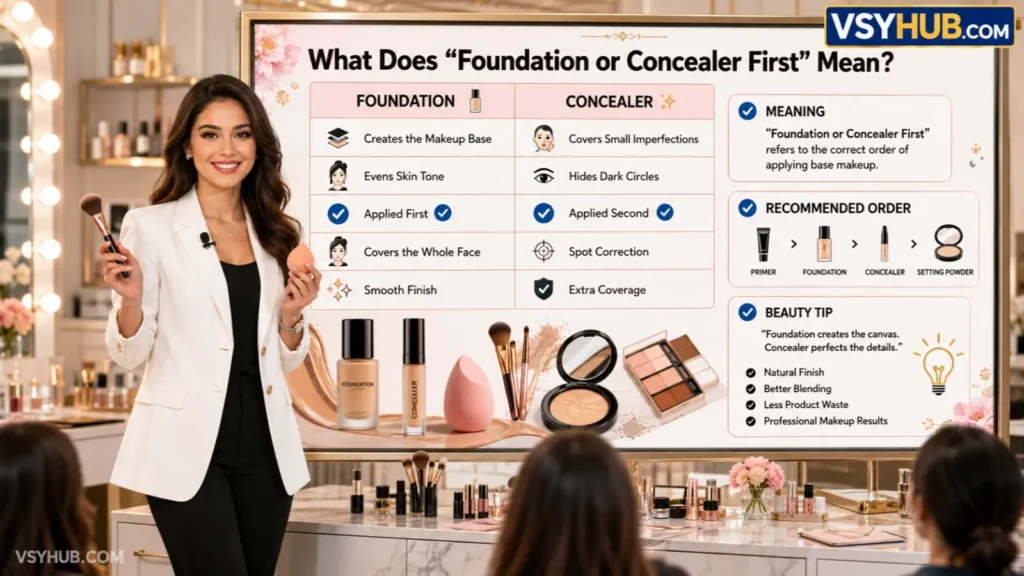
What Does “Foundation or Concealer First” Mean?
The phrase “foundation or concealer first” refers to the correct order of applying makeup products. It helps people understand which product should go on the skin before the other to achieve the best finish.
Foundation is designed to create an even base across your entire face. Concealer provides extra coverage for small areas that still need attention after foundation has been applied.
Most makeup artists recommend foundation first because it reduces the amount of concealer you need and creates a smoother, more balanced appearance.
Foundation
Foundation is a makeup product that evens out skin tone. It comes in liquid, cream, stick, powder, and serum formulas. It can cover redness, uneven pigmentation, and minor imperfections while giving your skin a uniform look.
Concealer
Concealer is thicker and more pigmented than foundation. It is used to hide dark circles, acne marks, scars, redness, and other small imperfections that foundation cannot fully cover.
Why the Order Matters
Using foundation first helps you see which areas truly need concealer. This prevents heavy makeup and gives your skin a more natural finish.
Related Beauty Terms
Similar Products
- BB Cream
- CC Cream
- Skin Tint
- Color Corrector
- Tinted Moisturizer
Related Makeup Tools
- Makeup Sponge
- Foundation Brush
- Concealer Brush
- Powder Puff
- Beauty Blender
Why Foundation Usually Comes First
Many beginners believe concealer should always go first because they want to hide dark circles immediately. However, professional makeup artists usually recommend applying foundation before concealer for several practical reasons.
Creates an Even Base
Foundation smooths out your skin tone across your entire face. Once your complexion looks more even, many small imperfections become less noticeable.
Uses Less Concealer
If foundation already covers most redness or discoloration, you only need a tiny amount of concealer afterward. This saves product and prevents a cakey appearance.
Gives a Natural Finish
Too much concealer can make the face look heavy or patchy. Applying foundation first allows concealer to blend seamlessly into the makeup.
Makes Blending Easier
Foundation creates a smooth surface for concealer. Both products blend together more naturally without harsh lines.
Helps Makeup Last Longer
When products are layered correctly, they usually stay in place longer throughout the day, especially when finished with powder or setting spray.
Are There Times to Apply Concealer First?
Although foundation first is the standard method, there are situations where applying concealer first can work well.
Heavy Dark Circles
People with very dark under-eye circles sometimes use a color corrector or concealer before foundation. The foundation then blends everything together for a softer look.
Spot Concealing
If you have only one or two blemishes and do not want to wear full-face foundation, you may apply concealer directly to those areas and blend carefully.
Sheer Foundation
Very lightweight foundations or skin tints provide minimal coverage. Some makeup lovers prefer applying concealer first so that the light foundation can soften the edges without removing too much coverage.
Professional Makeup Techniques
Professional makeup artists sometimes change the order depending on the person’s skin type, lighting, photography, or makeup style. Bridal makeup, television makeup, and editorial makeup may use slightly different techniques.
Foundation vs. Concealer
| Feature | Foundation | Concealer |
|---|---|---|
| Main Purpose | Creates an even skin tone | Covers specific imperfections |
| Coverage Area | Entire face | Small targeted areas |
| Texture | Usually lighter | Usually thicker |
| Coverage | Light to Full | Medium to Full |
| Best For | Overall complexion | Dark circles, acne, redness |
| Used First? | Usually Yes | Usually After Foundation |
Which One Should You Use?
The answer depends on your makeup goal.
Choose foundation first if you:
- Want natural everyday makeup.
- Have uneven skin tone.
- Need full-face coverage.
- Want makeup that blends smoothly.
Choose concealer only if you:
- Have generally clear skin.
- Want a quick, natural look.
- Need to cover only a few spots.
- Prefer lightweight makeup.
In most situations, the best routine is foundation first, concealer second. This simple order works well for beginners, professionals, and everyday makeup lovers alike. In Part 2, we’ll cover common mistakes, application tips for different skin types, and step-by-step examples for achieving a flawless finish.
Step-by-Step Guide to Applying Foundation and Concealer
Following the correct makeup order can make your makeup look smoother, last longer, and feel lighter on your skin. Even expensive products may not give good results if they are applied in the wrong order.
Step 1: Prepare Your Skin
Start with clean skin. Wash your face using a gentle cleanser to remove dirt and oil. Then apply a moisturizer suitable for your skin type. During the daytime, always finish your skincare with sunscreen.
Healthy, hydrated skin helps foundation and concealer blend more easily.
Step 2: Apply Primer (Optional)
Primer is not required every day, but it can help makeup last longer and make pores appear smaller.
Choose a primer based on your skin type:
- Hydrating primer for dry skin.
- Mattifying primer for oily skin.
- Blurring primer for large pores.
- Illuminating primer for dull skin.
Step 3: Apply Foundation
Choose a foundation that matches your natural skin tone.
Apply small dots on your forehead, cheeks, nose, and chin. Blend outward using a damp makeup sponge, foundation brush, or clean fingers.
Build coverage slowly instead of applying a thick layer all at once.
Step 4: Apply Concealer
After foundation, check your face in natural light.
Apply concealer only where extra coverage is needed:
- Under the eyes
- Around the nose
- On acne spots
- Over redness
- On dark marks
Blend gently without rubbing too much.
Step 5: Set Your Makeup
If you have oily skin or want your makeup to stay in place all day, lightly apply setting powder over areas that become shiny.
Finish with a setting spray for extra longevity.
Common Mistakes When Applying Foundation and Concealer
Many beginners make small mistakes that affect the final look. Learning these early can save both time and makeup products.
Mistake 1: Applying Too Much Foundation
❌ Incorrect
Using several thick layers to cover every flaw.
✔ Correct
Apply a thin layer first and build coverage only where needed.
Why it happens: Beginners think more product means better coverage.
Quick Tip: Less makeup usually looks more natural.
Mistake 2: Choosing the Wrong Shade
❌ Incorrect
Using foundation that is much lighter or darker than your skin.
✔ Correct
Match foundation to your jawline in natural daylight.
Why it happens: Store lighting can change how colors appear.
Quick Tip: Always test before buying.
Mistake 3: Using Too Much Concealer
❌ Incorrect
Covering large areas of the face with thick concealer.
✔ Correct
Apply concealer only on areas needing extra coverage.
Why it happens: Many people think concealer replaces foundation.
Quick Tip: Foundation handles the overall coverage.
Mistake 4: Skipping Skin Preparation
❌ Incorrect
Applying makeup directly onto dry skin.
✔ Correct
Moisturize before applying makeup.
Why it happens: Beginners often rush their routine.
Quick Tip: Well-prepared skin gives smoother makeup.
Mistake 5: Not Blending Properly
❌ Incorrect
Leaving visible makeup lines around the jaw or under the eyes.
✔ Correct
Blend gently until foundation and concealer melt into the skin.
Why it happens: Using too much product or blending too quickly.
Quick Tip: Use a damp sponge for a seamless finish.
Mistake 6: Applying Powder Too Early
❌ Incorrect
Applying powder before concealer is blended.
✔ Correct
Blend everything first, then set with powder.
Quick Tip: Powder locks makeup in place after blending.
Foundation and Concealer for Different Skin Types
Every skin type has different needs. Choosing the right products makes a big difference.
Dry Skin
Dry skin needs extra hydration.
Choose:
- Hydrating foundation
- Creamy concealer
- Dewy finish products
Avoid using too much powder because it can make dry patches more visible.
Oily Skin
Oily skin produces excess oil during the day.
Choose:
- Oil-free foundation
- Matte concealer
- Setting powder
- Long-wear formulas
These products help reduce shine.
Combination Skin
Combination skin is oily in some areas and dry in others.
Use lightweight foundation and apply powder only on the oily areas like the forehead, nose, and chin.
Sensitive Skin
Sensitive skin can react to fragrances or harsh ingredients.
Look for:
- Fragrance-free products
- Non-comedogenic formulas
- Dermatologist-tested makeup
Always patch-test new products before using them on your whole face.
Foundation or Concealer First for Different Makeup Styles
The best order may also depend on the type of makeup look you want.
Everyday Makeup
For daily wear, foundation first is usually the best choice.
It creates a fresh, natural appearance without using too much makeup.
Office Makeup
Professional makeup should look polished but not heavy.
A light layer of foundation followed by small amounts of concealer gives a clean, professional finish.
Party Makeup
Special events often require longer-lasting makeup.
You may use medium to full-coverage foundation, followed by concealer for brighter under-eyes and extra spot coverage.
Finish with setting powder and setting spray.
Bridal Makeup
Bridal makeup usually needs maximum durability for long hours and photography.
Professional artists often apply foundation first, then concealer, while adding extra techniques like color correction if needed.
Everyday Examples
At School
A student wants light makeup for class.
She applies a lightweight foundation first and then adds concealer under her eyes after studying late the previous night.
At Work
A professional wants a natural appearance during meetings.
Foundation evens out the skin tone, while concealer hides a small blemish near the chin.
For Social Media
Someone records a makeup tutorial.
They begin with foundation to create an even canvas before brightening the under-eye area with concealer for a camera-ready finish.
For Daily Errands
A quick makeup routine includes moisturizer, foundation, concealer on a few spots, mascara, and lip balm.
The result looks fresh without feeling heavy.
Makeup Tips for Beginners
If you’re just starting with makeup, keep these tips in mind:
- Start with light coverage instead of full coverage.
- Blend slowly and patiently.
- Choose products that match your skin type.
- Use natural daylight when checking your makeup.
- Clean your brushes and sponges regularly.
- Don’t copy every trend without considering your skin’s needs.
- Practice regularly because blending improves with experience.
By following these simple techniques, you’ll achieve a smoother, more natural look while avoiding many of the common mistakes beginners make. In Part 3, we’ll cover professional makeup advice, Google search trends, FAQs, the final verdict, and an SEO-optimized conclusion.
Foundation or Concealer First in Professional Makeup
Professional makeup artists almost always recommend applying foundation before concealer. This technique creates a balanced base and allows them to use concealer only where extra coverage is needed.
For bridal makeup, fashion shows, television, and photography, artists may adjust the routine based on the person’s skin condition. For example, they may use a color corrector before foundation if someone has very dark circles or strong redness. However, the general order still remains foundation first, followed by concealer.
Why Professionals Prefer This Method
- Creates an even complexion.
- Prevents heavy or cakey makeup.
- Uses less product.
- Makes blending easier.
- Gives a more natural finish in photos and videos.
- Helps makeup last longer.
Why People Search “Foundation or Concealer First”
This beauty question has become popular because beginners often receive mixed advice from social media, YouTube tutorials, beauty influencers, and makeup brands.
People commonly search for questions like:
- Should I apply foundation before concealer?
- Can I use concealer without foundation?
- What is the correct makeup order?
- Why does my concealer look patchy?
- Which comes first for beginners?
These searches are popular in countries such as the United States, United Kingdom, Canada, Australia, India, and Pakistan, where makeup tutorials and beauty content are widely shared online.
As makeup trends change, some influencers experiment with different techniques, but the classic method—foundation first, concealer second—continues to be the most recommended approach for everyday makeup.
Comparison Table: Foundation First vs. Concealer First
| Feature | Foundation First | Concealer First |
|---|---|---|
| Best for beginners | ✔ Yes | Sometimes |
| Natural finish | ✔ Excellent | Good |
| Uses less concealer | ✔ Yes | No |
| Easy to blend | ✔ Yes | Can be harder |
| Everyday makeup | ✔ Recommended | Occasionally |
| Full-face makeup | ✔ Best choice | Less common |
| Spot concealing only | Optional | ✔ Can work well |
| Professional recommendation | ✔ Most common | Used in special cases |
Foundation or Concealer First for Students and Beginners
Learning makeup can feel confusing at first because there are so many products and techniques. The easiest way to remember the correct order is to focus on the purpose of each product.
Foundation creates the overall base.
Concealer fixes the small areas that still need extra coverage.
This simple routine works for most people and helps avoid using too much makeup.
Beginner Tips
- Buy foundation that matches your skin tone.
- Choose a concealer one shade lighter for under-eye brightening.
- Blend with a damp makeup sponge.
- Build coverage slowly instead of applying thick layers.
- Practice in natural daylight.
Signs You’re Applying Makeup Correctly
You are likely using foundation and concealer in the right way if:
- Your skin looks even but still natural.
- There are no visible makeup lines.
- Dark circles appear brighter without looking heavy.
- Blemishes are covered without thick layers.
- Your makeup stays comfortable throughout the day.
- Foundation and concealer blend together smoothly.
- Your face and neck match in color.
Simple Trick to Remember Foundation or Concealer First
A simple memory rule can help you remember the correct order every time.
Foundation = Base
Concealer = Fix
Think of it this way:
Imagine painting a wall.
First, you paint the entire wall with the main color. After it dries, you cover the tiny marks that are still visible.
Your makeup works the same way.
Foundation covers the whole face first.
Concealer fixes the remaining small imperfections afterward.
This easy comparison makes the order much easier to remember.
Expert Tips for Better Makeup Results
Small changes in your routine can make a big difference.
- Always prepare your skin with moisturizer.
- Wait a minute between skincare and makeup.
- Blend foundation downward around the jawline.
- Apply concealer in thin layers instead of one thick layer.
- Use clean brushes and sponges to prevent bacteria.
- Replace old makeup products regularly.
- Set oily areas with powder instead of your entire face.
- Remove all makeup before going to bed to keep your skin healthy.
These habits help your makeup look smoother while also protecting your skin.
Related Searches People Also Ask
Many users also search for these questions:
Can concealer replace foundation?
Yes, if you only need light coverage on a few spots. For full-face coverage, foundation works better.
Do I always need concealer?
No. If your foundation provides enough coverage, you may not need concealer.
Which foundation is best for beginners?
Lightweight liquid foundations are usually the easiest to apply and blend.
Can I skip foundation?
Yes. Many people use only concealer for a quick, natural makeup look.
Why does my concealer crease?
It often happens because of too much product, dry skin, or not setting it properly with powder.
Should I use primer every day?
Primer is optional but can improve the appearance and wear time of your makeup.
How do I choose the right shade?
Match foundation to your jawline in natural light, and choose a concealer that suits your coverage needs.
Is foundation first better for oily skin?
Yes. It creates an even base and helps reduce the amount of concealer needed.
Can I blend with my fingers?
Yes. Fingers work well for some cream products, although many people prefer a sponge or brush for a smoother finish.
Is expensive makeup always better?
Not necessarily. Good application techniques often matter more than the price of the products.
Frequently Asked Questions
Should foundation always come before concealer?
Yes. In most makeup routines, foundation is applied first, followed by concealer for extra coverage.
Can I use concealer without foundation?
Yes. If you have clear skin or want a natural look, concealer alone can work well.
Why do makeup artists use foundation first?
It creates an even base, reduces the need for extra concealer, and gives a smoother finish.
Does the makeup order affect how long it lasts?
Yes. Applying products in the correct order usually improves blending and wear time.
Is concealer thicker than foundation?
Yes. Concealer normally contains more pigment and is designed for targeted coverage.
What is the easiest makeup routine for beginners?
Moisturizer, sunscreen, foundation, concealer, powder (if needed), and a little blush or mascara is a simple everyday routine.
Final Verdict
If you’re wondering foundation or concealer first, the answer is simple.
For most people, apply foundation first and concealer second.
Foundation creates an even canvas, while concealer hides the small areas that still need extra coverage. This method looks more natural, uses less product, and is the technique recommended by most professional makeup artists.
Easy Memory Rule: Base first, fix second.
Conclusion
Knowing whether to apply foundation or concealer first can make your makeup routine easier and your final look more polished. While there are a few special situations where concealer may come first, the standard routine is to apply foundation before concealer. This order creates an even complexion, improves blending, and helps your makeup last longer.
As you practice, you’ll discover what works best for your skin type and makeup style. Start with light layers, blend carefully, and remember the simple rule: foundation builds the base, concealer perfects the details.

Aria Foster is a comparison and language writer who specializes in spelling differences, word meanings, grammar guides, and easy-to-understand language explanations. She creates clear, reader-friendly content that helps people understand commonly confused words and expressions.