Have you noticed unusual vaginal discharge, itching, or an unusual smell and wondered whether it’s BV or thrush? You’re not alone.
These two common vaginal conditions can have similar symptoms, making them easy to confuse.
People usually search for: BV or thrush symptoms, differences, causes, pronunciation, treatment, discharge, smell, itching, and how to tell them apart.
Understanding the difference is important because each condition has different causes and is treated in different ways.
In this guide, you’ll learn the meaning, pronunciation, symptoms, causes, examples, common differences, expert tips, and simple explanations in easy English.
BV or Thrush – Quick Answer
BV (Bacterial Vaginosis) and thrush (a vaginal yeast infection) are not the same condition.
👉 BV is caused by an imbalance of the natural bacteria in the vagina.
👉 Thrush is usually caused by an overgrowth of a fungus called Candida (a type of yeast).
Although both can cause vaginal discomfort, their symptoms and treatments are different.
Quick Comparison
- 🦠 BV = Bacterial imbalance.
- 🍄 Thrush = Yeast (fungal) infection.
- 👃 BV often causes a strong fishy odor.
- 🤍 Thrush often causes thick, white discharge and intense itching.
- 💊 They usually require different treatments.
Examples
- A strong fishy smell may suggest BV.
- Thick, white, cottage cheese-like discharge is more common with thrush.
- Some people develop BV after changes in their vaginal bacteria.
- Thrush often causes itching and irritation around the vulva.
Simple Rule
Think:
- BV = Bacteria
- Thrush = Yeast (Fungus)
Easy Memory Trick:
- B = Bacteria = BV
- T = Thick white discharge = Thrush
Important: Similar symptoms can have different causes. Only a qualified healthcare professional can diagnose the exact condition.
What Does BV or Thrush Mean?
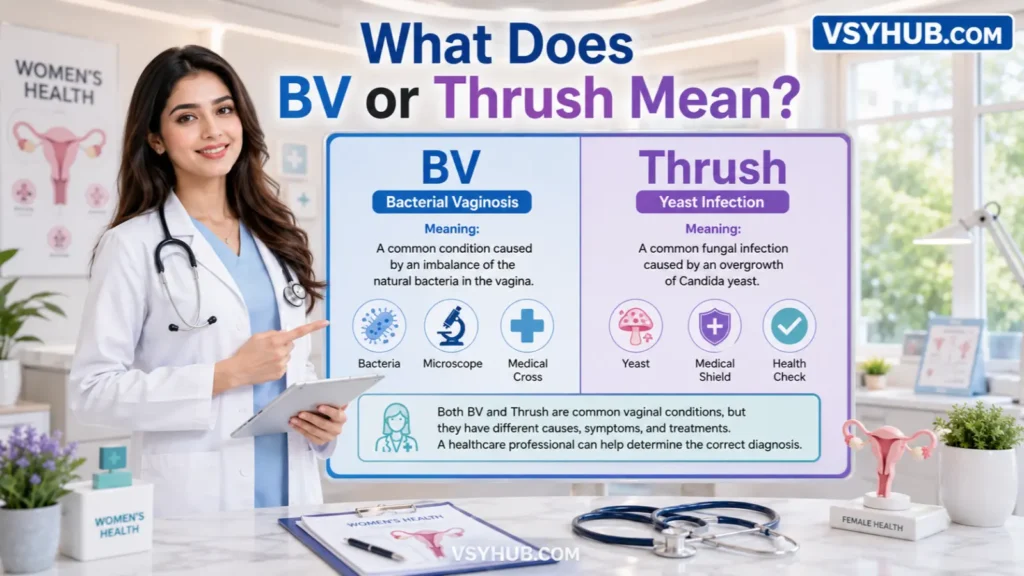
Although people often compare them, BV and thrush are two separate medical conditions.
What Is BV?
BV stands for Bacterial Vaginosis.
It happens when the normal balance of bacteria inside the vagina changes. Certain bacteria become more common than they should be, leading to symptoms in some people.
Common symptoms may include:
- Thin gray or white discharge.
- A fishy vaginal odor.
- A stronger smell after sex.
- Mild irritation in some cases.
- Some people have no symptoms at all.
BV is one of the most common causes of unusual vaginal discharge.
What Is Thrush?
Thrush, also called a vaginal yeast infection, is usually caused by an overgrowth of Candida, a yeast that normally lives in the body without causing problems.
Common symptoms may include:
- Thick white discharge.
- Intense itching.
- Burning sensation.
- Redness or swelling around the vulva.
- Pain during urination or sex in some cases.
Unlike BV, thrush usually does not cause a strong fishy odor.
Key Differences
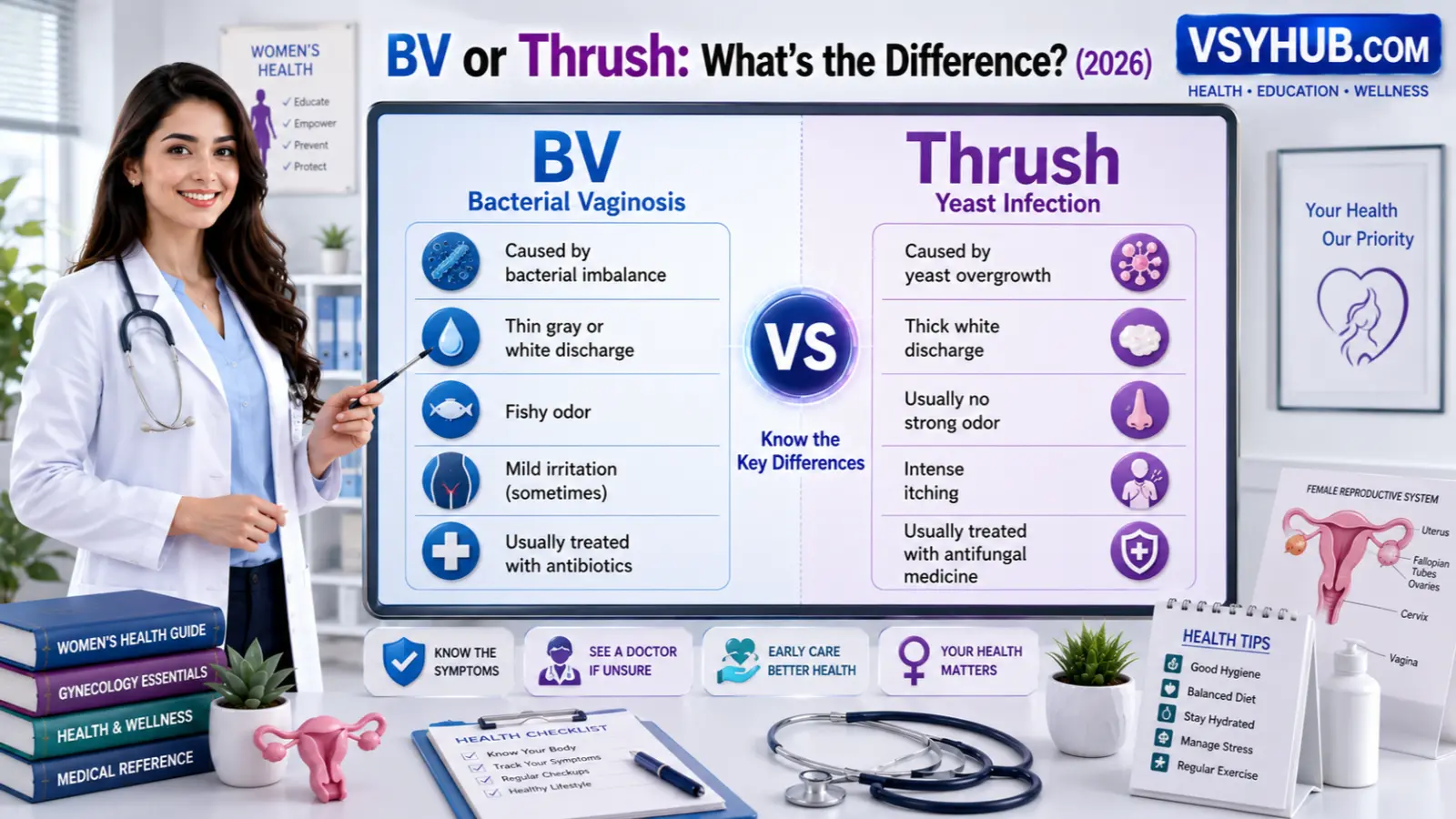
| Feature | BV | Thrush |
|---|---|---|
| Main Cause | Bacterial imbalance | Yeast (Candida) overgrowth |
| Odor | Often fishy | Usually little or no odor |
| Discharge | Thin, gray or white | Thick, white, cottage cheese-like |
| Itching | Mild or none | Often severe |
| Treatment | Antibiotics | Antifungal medicine |
Synonyms
BV
- Bacterial Vaginosis.
- Vaginal bacterial imbalance.
Thrush
- Vaginal yeast infection.
- Candida infection.
- Vaginal candidiasis.
Opposites
There are no true opposites, but both conditions are compared with:
- A healthy vaginal microbiome.
- Normal vaginal flora.
- Normal vaginal discharge.
Related Terms
- Vaginal health.
- Vaginal discharge.
- Yeast infection.
- Vaginal bacteria.
- Candida.
- pH balance.
- Antibiotics.
- Antifungal medicine.
- Recurrent infections.
- Women’s health.
The Origin of BV or Thrush
Both terms have been used in medicine for many years, but they describe different health conditions.
Origin of BV
The term Bacterial Vaginosis combines:
- Bacterial = relating to bacteria.
- Vaginosis = a condition affecting the vagina without the inflammation typically seen in infections ending in “-itis.”
Medical professionals began using the term to describe changes in the normal bacterial balance rather than a traditional bacterial infection.
Origin of Thrush
The word thrush has long been used to describe yeast infections caused by Candida.
Although the name sounds unusual, it has become the common everyday term for vaginal yeast infections in many English-speaking countries.
Healthcare professionals may also use:
- Vaginal candidiasis.
- Candida infection.
- Yeast infection.
Today, both BV and thrush are commonly discussed in healthcare, medical education, women’s health resources, and online searches.

How to Pronounce BV or Thrush
Correct pronunciation helps when talking with a healthcare professional.
BV
Pronunciation:
BEE – VEE
Phonetic:
/biː viː/
Say each letter separately.
Bacterial Vaginosis
Pronunciation:
bak-TEER-ee-uhl vaj-uh-noh-SIS
Thrush
Pronunciation:
THRUSH
Phonetic:
/θrʌʃ/
It rhymes with brush.
Candida
Pronunciation:
KAN-dih-duh
Easy Speaking Tips
- Say BV as two separate letters.
- Say thrush with the soft “th” sound, like in think.
- Don’t rush the pronunciation of vaginosis.
Common Pronunciation Mistakes
Some beginners mistakenly say:
- “Bee-vuh”
- “Trush”
- “Vaginosis”
Listening to healthcare professionals or trusted medical videos can help you hear the correct pronunciation.
British English vs. American English Usage
The names BV and thrush are recognized in both British and American English, but there is one important difference.
| Feature | British English | American English | Notes |
|---|---|---|---|
| BV | Common | Common | Same meaning |
| Thrush | Very common | Less common | In the US, “yeast infection” is often used instead |
| Yeast Infection | Used | Very common | Refers to vaginal candidiasis |
| Pronunciation | Nearly the same | Nearly the same | Minor accent differences only |
Whether someone says thrush or yeast infection, they are usually referring to the same condition caused by an overgrowth of Candida.
Which One Could It Be?
It can be difficult to tell the difference based on symptoms alone because some signs overlap.
Symptoms That May Suggest BV
- Thin gray or white discharge.
- Fishy odor.
- Stronger smell after sex.
- Mild irritation.
- Sometimes no symptoms.
Symptoms That May Suggest Thrush
- Thick white discharge.
- Intense itching.
- Burning sensation.
- Redness or swelling.
- Pain or discomfort during urination or sex.
Quick Comparison Table
| Symptom | More Common in BV | More Common in Thrush |
|---|---|---|
| Fishy odor | ✔ | ✘ |
| Thick white discharge | ✘ | ✔ |
| Thin discharge | ✔ | ✘ |
| Severe itching | ✘ Usually mild | ✔ Common |
| Burning | Sometimes | ✔ Common |
| Redness | Mild | ✔ Common |
Important Reminder
Although these signs can be helpful, symptoms alone cannot confirm whether you have BV or thrush. Other vaginal conditions, including sexually transmitted infections (STIs) and other causes of vaginal irritation or discharge, can have similar symptoms.
If symptoms are severe, keep returning, occur during pregnancy, or you’re unsure of the cause, it’s important to seek advice from a qualified healthcare professional for an accurate diagnosis and appropriate treatment.
Common Mistakes With BV or Thrush
Many people confuse BV (Bacterial Vaginosis) and thrush (a vaginal yeast infection) because some symptoms can overlap. However, they have different causes and usually need different treatments.
Mistake 1: Thinking BV and Thrush Are the Same
❌ Incorrect: BV and thrush are the same condition.
✔ Correct: They are different conditions with different causes.
Why?
- BV is linked to an imbalance of vaginal bacteria.
- Thrush is caused by an overgrowth of Candida yeast.
Beginner Tip:
Remember:
- BV = Bacteria
- Thrush = Yeast
Mistake 2: Treating Every Symptom as Thrush
❌ Incorrect: Every itch or discharge means I have thrush.
✔ Correct: Itching and discharge can have many causes, including BV, thrush, skin irritation, allergies, or sexually transmitted infections (STIs).
Mistake 3: Diagnosing Yourself Based on Smell Alone
❌ Incorrect: A vaginal odor always means BV.
✔ Correct: Although a fishy odor is commonly associated with BV, odor alone cannot confirm the cause.
Mistake 4: Using the Wrong Treatment
❌ Incorrect: Antibiotics and antifungal medicines work the same way.
✔ Correct: BV is commonly treated with antibiotics, while thrush is treated with antifungal medication.
Mistake 5: Ignoring Persistent Symptoms
❌ Incorrect: The symptoms will always disappear on their own.
✔ Correct: If symptoms continue, worsen, or keep returning, it’s important to see a healthcare professional.
Mistake 6: Believing Poor Hygiene Causes BV or Thrush
❌ Incorrect: These conditions happen because someone isn’t clean.
✔ Correct: BV and thrush can affect anyone. They are usually related to changes in the vaginal environment, not poor personal hygiene.
Mistake 7: Assuming They Are Always Sexually Transmitted
❌ Incorrect: BV and thrush are sexually transmitted infections.
✔ Correct: Neither condition is generally classified as an STI, although sexual activity may influence the risk of developing BV in some people.
BV or Thrush in Everyday Examples
Here are simple examples showing how these terms are used.
At a Doctor’s Appointment
- The doctor explained that the symptoms were more consistent with BV.
- Tests showed that the patient had thrush, not BV.
- The healthcare provider recommended the appropriate treatment after an examination.
At Home
- She noticed unusual discharge and decided to book a medical appointment.
- Instead of guessing, she spoke with a healthcare professional.
- Following the treatment instructions helped her symptoms improve.
In Health Education
- Students learned the difference between BV and thrush.
- The lesson explained how healthy vaginal bacteria help protect against infections.
- The teacher discussed common symptoms and when to seek medical advice.
Online Health Searches
People often search:
- Do I have BV or thrush?
- Why do I have itching but no odor?
- Can BV and thrush happen together?
- What causes recurrent thrush?
Everyday Conversations
Person A: I think I might have thrush.
Person B: It’s best not to guess. A healthcare professional can help identify the cause.
Person A: What’s the difference between BV and thrush?
Person B: BV is linked to bacteria, while thrush is usually caused by yeast.
BV or Thrush in Different Contexts
Pregnancy
Hormonal changes during pregnancy can increase the chance of some vaginal conditions.
If you’re pregnant and notice symptoms such as unusual discharge, itching, or odor, contact your healthcare provider rather than treating yourself without advice.
Sexual Health
Although BV and thrush are not generally classified as sexually transmitted infections, sexual activity can sometimes affect the balance of vaginal bacteria.
Using protection and maintaining good sexual health habits may help lower certain risks, but they cannot prevent every case.
Everyday Hygiene
Healthy habits can support vaginal health.
These include:
- Wearing breathable cotton underwear.
- Avoiding scented vaginal products if they cause irritation.
- Changing out of wet clothing promptly.
- Following healthcare advice about personal hygiene.
Healthcare
Doctors and nurses may use:
- Medical history.
- Symptom review.
- Physical examination.
- Laboratory testing when needed.
This helps determine whether symptoms are caused by BV, thrush, or another condition.
Women’s Health Education
Learning the difference between these conditions helps people:
- Recognize possible symptoms.
- Avoid unnecessary worry.
- Understand why proper diagnosis matters.
- Know when to seek medical advice.
BV or Thrush – Google Trends & Usage Data
Searches for BV or thrush remain common because many people experience symptoms such as itching, unusual discharge, or vaginal odor and want to understand what they might mean.
Why People Search for BV or Thrush
People often search because they want to:
- Understand the difference between the two conditions.
- Compare symptoms.
- Learn about treatment options.
- Know whether they should see a doctor.
- Find information before buying over-the-counter medicine.
Search interest comes from many countries, including the United States, United Kingdom, Canada, Australia, India, and Pakistan, where people look for clear and beginner-friendly health information.
Popular Long-Tail Searches
People commonly search:
- BV or thrush symptoms.
- BV vs thrush discharge.
- Does BV smell different from thrush?
- Can you have BV and thrush together?
- How to tell the difference between BV and thrush.
- BV or yeast infection.
- What causes recurrent thrush?
- How is BV treated?
These searches show that symptom comparison is one of the biggest reasons people seek information online.
Comparison Table: BV or Thrush
| Feature | BV (Bacterial Vaginosis) | Thrush (Yeast Infection) |
|---|---|---|
| Main Cause | Imbalance of vaginal bacteria | Overgrowth of Candida yeast |
| Fishy Odor | Common | Usually absent |
| Thick White Discharge | Uncommon | Common |
| Thin Gray or White Discharge | Common | Less common |
| Itching | Mild or none | Often intense |
| Burning | Sometimes | Common |
| Typical Treatment | Antibiotics | Antifungal medication |
| Can Return? | Yes | Yes |
| Self-Diagnosis Reliable? | No | No |
BV or Thrush in Professional Healthcare
Healthcare professionals do not rely on one symptom alone to make a diagnosis.
They may consider:
- Medical history.
- Current symptoms.
- Vaginal discharge.
- Odor.
- Physical examination.
- Laboratory tests if necessary.
Because several conditions can produce similar symptoms, professional evaluation helps ensure the correct treatment.
Why an Accurate Diagnosis Matters
Correct diagnosis helps:
- Choose the right medicine.
- Avoid unnecessary treatment.
- Reduce the chance of recurring symptoms.
- Identify other conditions if present.
BV or Thrush for Beginners
If you’re learning about vaginal health for the first time, it’s normal to find these conditions confusing.
Why Beginners Get Confused
- Both can cause unusual discharge.
- Both may cause discomfort.
- Symptoms sometimes overlap.
- Online information can be incomplete or misleading.
Easy Learning Tips
- BV = Bacteria = Fishy odor is more common.
- Thrush = Yeast = Thick white discharge and itching are more common.
- Remember that these are general patterns, not a way to diagnose yourself.
- If symptoms are new, severe, recurrent, or you’re unsure of the cause, seek advice from a qualified healthcare professional instead of relying only on internet searches.
Understanding these differences makes it easier to recognize why BV and thrush are separate conditions and why the correct diagnosis is important for proper treatment.
Signs, Characteristics, or Common Uses Related to BV or Thrush
Although BV and thrush can cause similar symptoms, each condition has its own common characteristics. These signs can help you understand the differences, but they cannot confirm a diagnosis.
Common Signs of BV
You may notice:
- Thin gray or white vaginal discharge.
- A strong fishy odor.
- Odor that becomes more noticeable after sex.
- Mild burning during urination in some cases.
- Mild irritation or no discomfort at all.
- Sometimes no symptoms.
Common Signs of Thrush
You may notice:
- Thick, white, cottage cheese-like discharge.
- Intense itching around the vulva.
- Burning or soreness.
- Redness and swelling.
- Discomfort during sex.
- Pain while urinating in some cases.
Similar Symptoms
Both conditions may cause:
- Vaginal discomfort.
- Unusual discharge.
- Irritation.
- Burning sensations.
- Changes from your normal vaginal health.
Because the symptoms can overlap, it’s important not to rely on symptoms alone to identify the cause.
Simple Trick to Remember BV or Thrush
Here’s an easy memory trick for beginners.
BV
Think:
B = Bacteria
Also remember:
B = Bad odor (a fishy smell is more commonly associated with BV).
Thrush
Think:
T = Thick white discharge
Also remember:
T = Tiny yeast (fungus).
Think of It This Way
Imagine two containers.
🦠 BV Box
Inside you’ll find:
- Bacteria.
- Fishy odor.
- Thin discharge.
🍄 Thrush Box
Inside you’ll find:
- Yeast.
- Itching.
- Thick white discharge.
This simple picture makes the differences easier to remember.
Expert Tips
Many articles compare symptoms but miss important practical advice.
1. Avoid Self-Diagnosing
Many vaginal conditions share similar symptoms.
Even experienced healthcare professionals sometimes use laboratory tests to confirm the cause.
2. Don’t Use Leftover Medicine
Using medicine that worked previously may not help if the current condition has a different cause.
Always follow the advice of a qualified healthcare professional.
3. Complete the Recommended Treatment
If treatment is prescribed, complete it exactly as instructed, even if symptoms improve early.
4. Protect Your Vaginal Health
Healthy habits may include:
- Wearing breathable cotton underwear.
- Avoiding products that cause irritation.
- Changing out of wet clothing promptly.
- Following your healthcare provider’s advice.
5. Know When to Seek Medical Care
Arrange a medical evaluation if:
- Symptoms are severe.
- Symptoms return frequently.
- You are pregnant.
- You have fever or severe pelvic pain.
- The diagnosis is uncertain.
- Treatment does not improve your symptoms.
Related Searches People Also Ask
Here are common questions people search online.
What is the difference between BV and thrush?
BV is caused by an imbalance of vaginal bacteria, while thrush is usually caused by an overgrowth of Candida yeast.
Can BV and thrush happen at the same time?
Yes. Although they are different conditions, some people can have both at the same time. A healthcare professional can help determine the correct diagnosis and treatment.
Does BV always smell fishy?
A fishy odor is a common symptom of BV, but not everyone experiences it.
Does thrush always cause itching?
Itching is very common with thrush, but symptoms can vary from person to person.
Can stress cause BV or thrush?
Stress itself is not considered a direct cause, but factors that affect overall health may influence the body’s natural balance in some people.
Can antibiotics lead to thrush?
Yes. Antibiotics may reduce healthy bacteria, allowing yeast to grow more easily in some individuals.
Is BV a sexually transmitted infection?
BV is not generally classified as a sexually transmitted infection, although sexual activity may influence the risk in some people.
Can men get thrush?
Yes. Yeast infections can also affect men, although they are less common.
Should I use over-the-counter medicine without knowing the cause?
It’s best to know the cause first, because treatments for BV and thrush are different.
Can these conditions come back?
Yes. Both BV and thrush can recur, which is why proper diagnosis and treatment are important.
FAQs
Is BV the same as a yeast infection?
No. BV and yeast infections have different causes and usually require different treatments.
Which condition causes a fishy smell?
A fishy vaginal odor is more commonly associated with BV.
Which condition causes thick white discharge?
Thick white discharge is more commonly associated with thrush.
Can I tell the difference by symptoms alone?
Not always. Several vaginal conditions can cause similar symptoms.
Should I see a doctor if symptoms keep returning?
Yes. Recurrent symptoms should be assessed by a qualified healthcare professional.
Can I prevent BV or thrush completely?
There is no guaranteed way to prevent either condition, but healthy habits and following medical advice may help reduce the risk for some people.
Are BV and thrush common?
Yes. Both are among the most common vaginal conditions.
Can pregnancy affect the risk?
Yes. Hormonal changes during pregnancy can increase the likelihood of certain vaginal conditions, so new symptoms should be discussed with a healthcare provider.
Can I ignore mild symptoms?
Persistent, worsening, or unusual symptoms should not be ignored. If you’re unsure of the cause, seek medical advice.
What’s the easiest way to remember the difference?
Remember:
- BV = Bacteria = Fishy odor is more common.
- Thrush = Yeast = Thick white discharge and itching are more common.
Final Verdict
Understanding the difference between BV or thrush is important because the two conditions have different causes, symptoms, and treatments.
- Choose BV if you’re learning about Bacterial Vaginosis, a condition linked to changes in vaginal bacteria.
- Choose thrush when referring to a vaginal yeast infection caused by an overgrowth of Candida.
The symptoms can overlap, so it’s not always possible to know which condition is present based on symptoms alone. A healthcare professional can provide the correct diagnosis and recommend the appropriate treatment.
Easiest Memory Rule
BV = Bacteria = Fishy odor is more common.
Thrush = Yeast = Thick white discharge and itching are more common.
Conclusion
Many people search for BV or thrush because both conditions can cause vaginal discomfort, discharge, or irritation. While they may appear similar at first, they are different conditions that usually require different treatments.
The most important takeaway is not to rely on internet searches alone for a diagnosis. Learning the common signs can help you understand the differences, but only a qualified healthcare professional can determine the exact cause of your symptoms and recommend the right treatment.
Whenever you’re unsure, persistent symptoms, severe discomfort, pregnancy, or recurring infections are good reasons to seek medical advice promptly.

Aria Foster is a comparison and language writer who specializes in spelling differences, word meanings, grammar guides, and easy-to-understand language explanations. She creates clear, reader-friendly content that helps people understand commonly confused words and expressions.